
ZEBRAFISH HOUSING SYSTEMS FOR RESEARCH AND TEACHING LABS
Flexible aquatic housing and filtration planning for zebrafish programs that need dependable daily operation today and room to grow tomorrow.
Zebrafish housing systems for research and teaching facilities should be selected around tank capacity, life stage, water-quality workflow, daily service access, and future capacity—not only the number of racks needed on day one. Aquaneering provides rack and central-filtration configurations that can be planned for zebrafish research, teaching, and growing aquatic programs.
START WITH THE FACILITY’S TWO OPERATING MODES
Mixed research-and-teaching facilities need a housing plan that supports both experimental work and the practical routines of staff and students. A useful system plan accounts for the research program’s husbandry and capacity requirements while making daily checks, training, and service workflows clear for the people who operate the facility.
For research use, define the species and life stages to be housed, expected tank volumes, water-parameter requirements, monitoring needs, and the capacity needed for current protocols. For teaching use, confirm how learners and instructors will access the room, how the team will perform daily checks, and how the operating workflow will remain manageable as the facility grows.
The goal is not simply to select a rack. It is to plan a zebrafish housing system that fits the way the facility will work.
WHAT TO EVALUATE BEFORE SELECTING A ZEBRAFISH HOUSING SYSTEM
1. Tank sizes, life stages, and research scope
Start with the tank formats needed for the program. Some zebrafish facilities primarily need micro-tank capacity, while others need flexibility across life stages or the ability to support multiple aquatic model organisms. The selected rack configuration should align with the expected housing volume and the facility’s research plan.
2. Water quality and filtration workflow
Water quality is central to zebrafish husbandry. Facility planning should account for biological and mechanical filtration, temperature, pH, conductivity, dissolved oxygen, water flow, and the monitoring workflow required by the program. Aquaneering offers stand-alone and central-filtration configurations with integrated monitoring and dosing capabilities across applicable systems.
3. Daily service access and room layout
A housing system should be evaluated in the actual room, not only from a single-rack specification. Before finalizing a layout, confirm access for routine tank work, filter service, UV service, sensor calibration, sump cleaning, and movement of equipment through aisles and doorways. Plan clearances around the installed configuration so the team can reach each rack as the room reaches capacity.
4. Expansion path
Research programs change as new studies, grants, teaching cohorts, and animal populations are added. Define whether the facility needs a stand-alone rack, a modular path for additional shelves or racks, or a shared central-filtration approach. Planning this path early helps the team evaluate present needs alongside future growth.
AQUANEERING SYSTEM OPTIONS FOR ZEBRAFISH FACILITIES
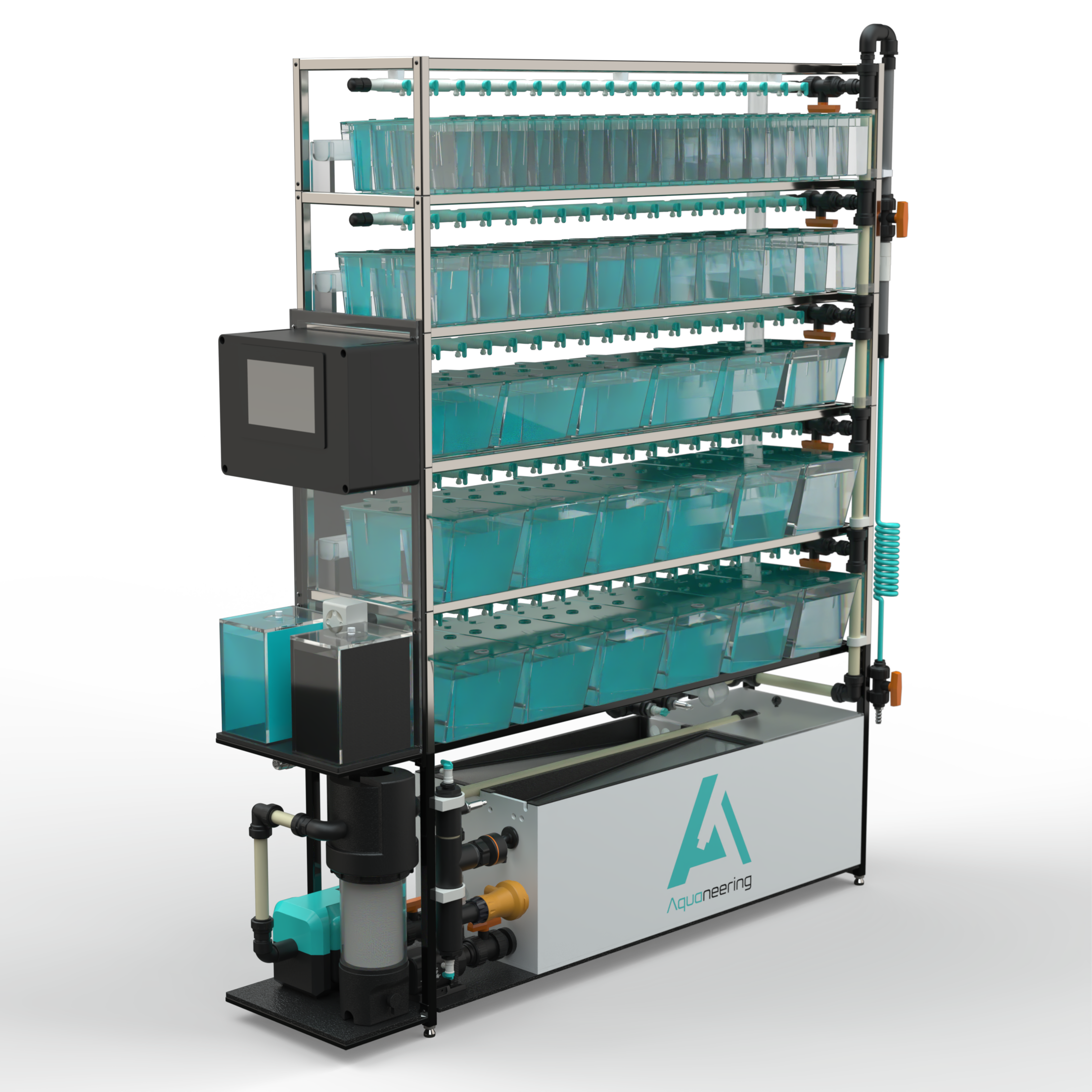
AquaGenZ™ Modular Rack System
AquaGenZ™ is Aquaneering’s modular rack platform for aquatic research facilities. Its modular shelf design is intended to help facilities start with the capacity they need and add capacity as programs grow. The system includes integrated controls, monitoring, and filtration features for aquatic research workflows.
Learn more: https://aquaneering.com/latest-news/aquagenz
UltraFlex Rack System
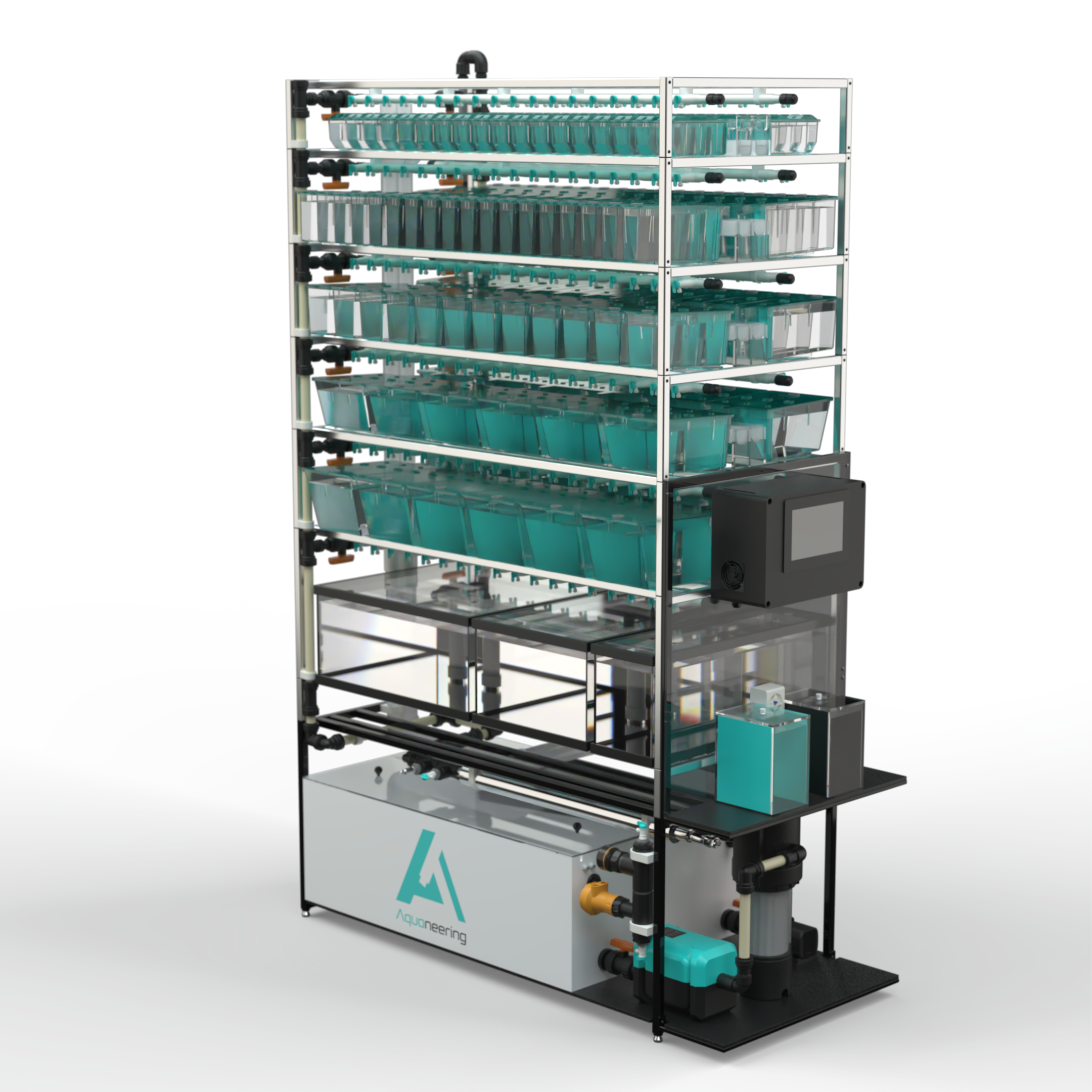
For facilities that need broad tank-size flexibility on one platform, the UltraFlex Rack System supports tank sizes from 0.8 L through 30 gallons. It can be configured for freshwater, brackish, and saltwater aquatic research applications and can operate as a stand-alone rack or as part of a central-filtration configuration.
Learn more: https://aquaneering.com/systems/ultraflex-rack
AquaFlex Rack System
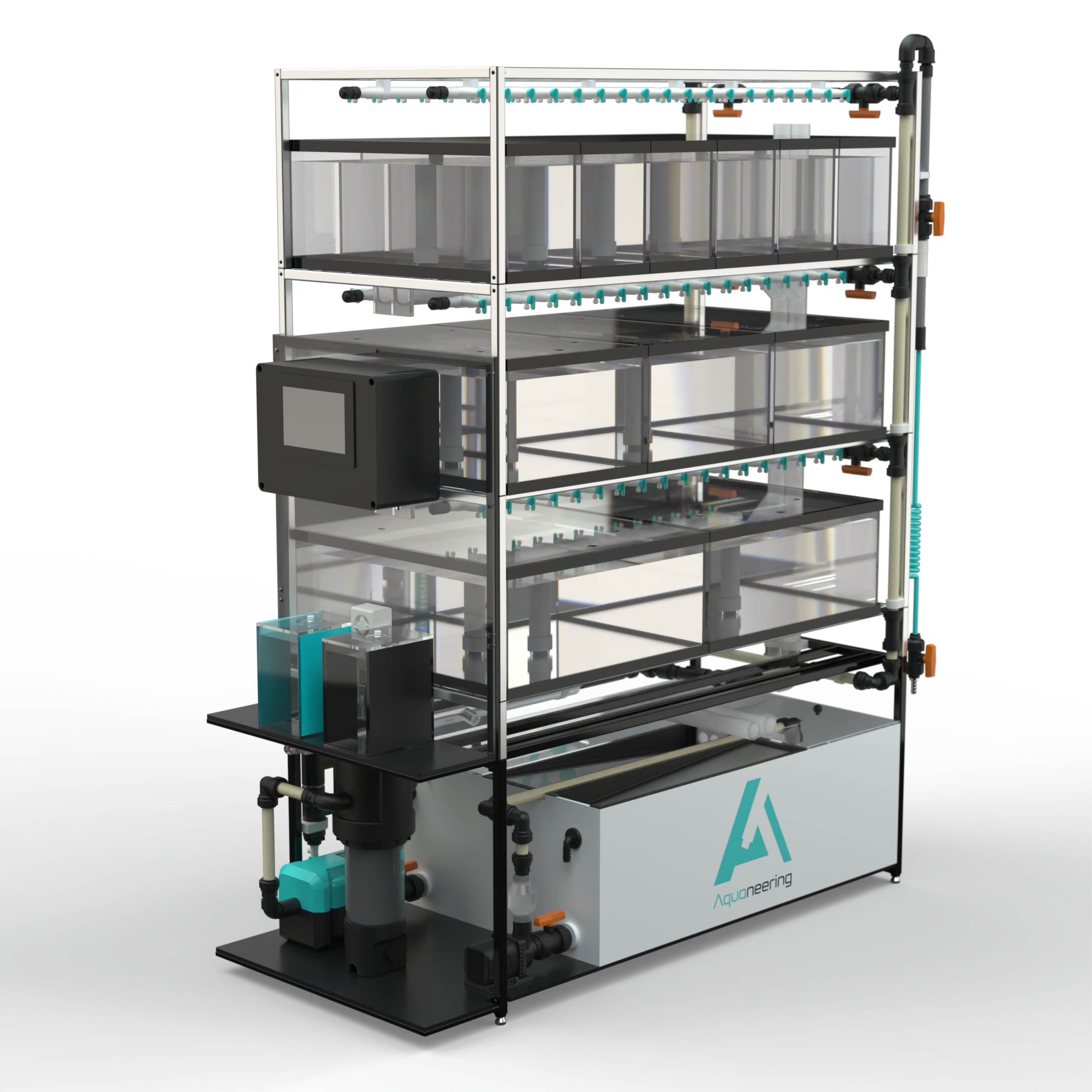
For programs that require larger tank volumes, the AquaFlex Rack System supports tank sizes from 4 through 30 gallons. It is designed for freshwater and saltwater aquatic research applications and can be planned as a stand-alone or central-filtration configuration.
Learn more: https://aquaneering.com/systems/aquaflex-rack
AquaGenZ™ Multi-Rack Central Filtration System
For larger facilities, Aquaneering’s AquaGenZ™ Multi-Rack Central Filtration System can connect from 3 to more than 200 compatible racks. It is designed for shared life support, centralized monitoring, and filtration at facility scale.
Learn more: https://aquaneering.com/systems/central-filtration-system
PLAN SERVICE WORKFLOW BEFORE THE PURCHASE ORDER
Service access should be part of the system-selection process. Review vendor drawings alongside the room layout and ask how routine filter service, UV service, sensor calibration, sump cleaning, and equipment access will work after all planned racks are installed.
A one-rack demonstration does not necessarily show the operating conditions of a fully equipped room. Map actual aisle widths, doors, columns, utilities, and service points. Confirm that the people responsible for daily facility work can reach the needed components without disrupting the rest of the system.
FREQUENTLY ASKED QUESTIONS
What zebrafish housing systems work for mixed research and teaching facilities?
A suitable system is one that matches the facility’s tank-size needs, water-quality workflow, daily service access, teaching routines, and expansion plan. For many facilities, the decision begins with whether a modular rack, a flexible multi-tank-size platform, or a multi-rack central-filtration system best fits the program’s current and future needs.
Should a zebrafish facility use stand-alone racks or central filtration?
The choice depends on the facility’s scale, room plan, operational workflow, and expansion needs. Stand-alone configurations can suit smaller or more independent deployments. A central-filtration configuration can support multiple compatible racks through a shared life-support architecture. Aquaneering can help assess which approach fits the planned facility.
Can a zebrafish housing facility expand over time?
Yes. Expansion should be considered during the initial planning process. Aquaneering offers modular rack options and multi-rack central-filtration configurations that can be considered when a facility expects future growth.
What should a laboratory manager review before selecting a rack?
Review the required tank sizes, species and life stages, filtration and monitoring needs, room layout, aisle clearance, service access, maintenance workflow, power and utility requirements, and planned capacity. Evaluate the full installed layout rather than an isolated rack.
PLAN A ZEBRAFISH FACILITY AROUND YOUR WORKFLOWS
Whether the program is supporting research, teaching, or both, the strongest housing plan begins with the facility’s real operating requirements. Talk with Aquaneering about rack configurations, filtration, monitoring, service access, and a scalable path for your zebrafish program.
BOOK A FACILITY PLANNING CONSULTATION
https://meetings-na2.hubspot.com/sandeep-patel/book-a-demo
Related guides:
https://aquaneering.com/latest-news/what-is-zebrafish-housing
https://aquaneering.com/latest-news/zebrafish-housing-systems-for-research-and-teaching-facilities