
Latest News & Blog
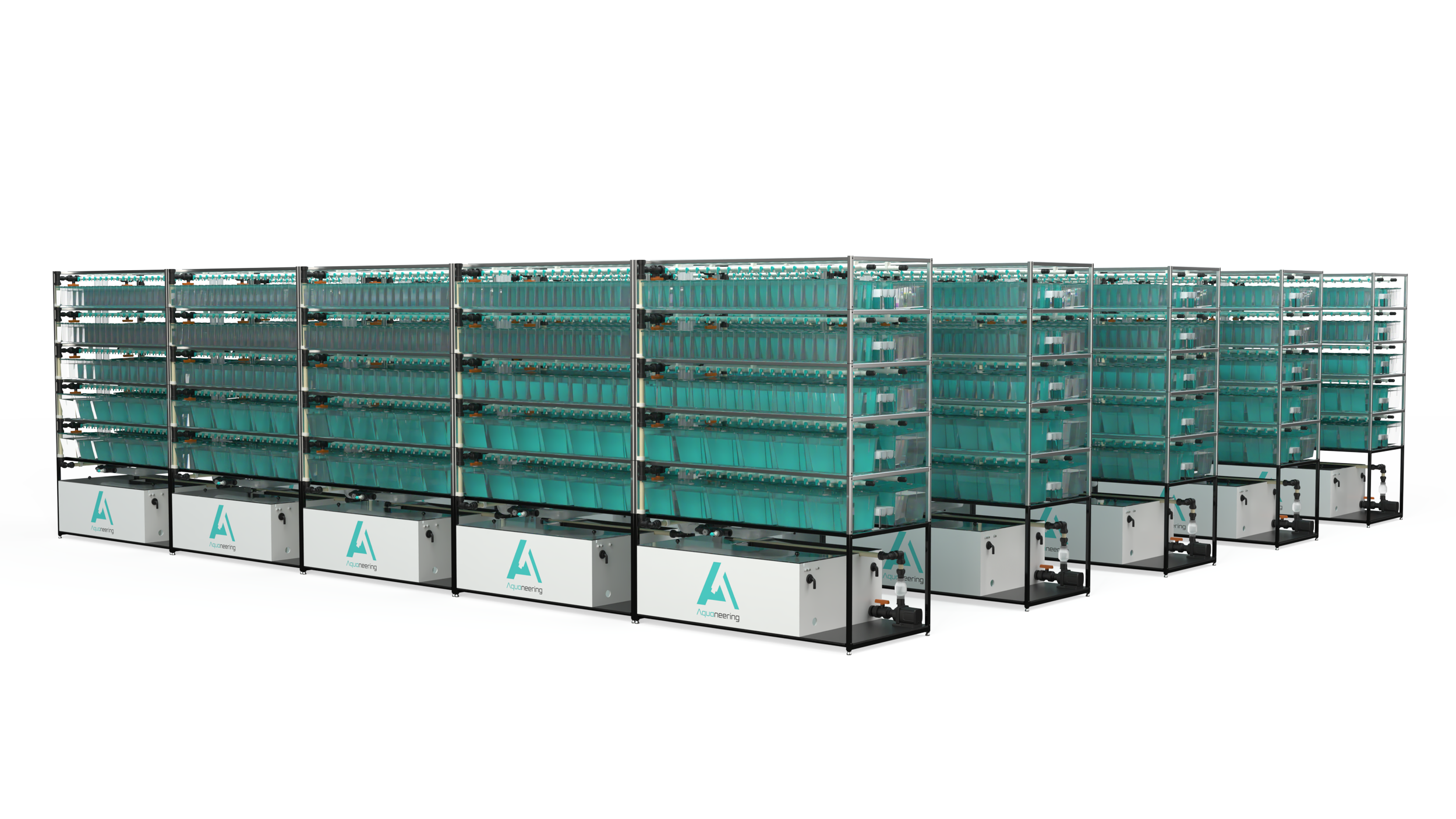
Zebrafish Housing Systems for Research and Teaching Facilities
Mixed research and teaching facilities should choose zebrafish housing systems by evaluating current and expected capacity, tank and species needs, water-management architecture, room footprint, daily operations, and a validated expansion path. The appropriate configuration depends on the specific research models, protocols, staffing, and institutional requirements—not capacity alone.
A system that works well for a research-only colony may not be the right operating model for a facility that also supports teaching rotations, changing personnel, scheduled demonstrations, and variable demand. The goal is to make daily husbandry, water-quality oversight, documentation, service access, and future growth manageable without compromising responsible animal care or research continuity.

What Researchers Really Need from Aquatic Animal Model Housing and Filtration Systems
Researchers and animal care teams searching for aquatic animal model housing and filtration systems are rarely looking for a tank alone. Their questions reveal a more demanding objective: they need an integrated environment that protects animal welfare, supports reproducible science, fits the available room, and remains manageable for years.
That is why today’s search queries—and increasingly, prompts submitted to artificial intelligence tools—are so specific. Facility personnel ask about rack footprints, tank density, pump performance, filtration capacity, ultraviolet treatment, alarm thresholds, quarantine, emergency response, and data integration. Together, these questions describe the modern aquatic facility as a living research infrastructure, not a collection of independent components.

AquaGenZ Modular Rack System for Research Facilities
Explore how Aquaneering’s AquaGenZ™ helps university and biomedical facilities select scalable, sensor-equipped aquatic rack infrastructure with water-quality oversight and a serviceable design.
For university and biomedical facility managers, selecting aquatic housing rack systems is not simply a matter of choosing a tank count. The right decision must accommodate today’s population, future grants, changing model needs, available floor space, staff workload, and the risk of an issue developing between scheduled husbandry checks. A system that is oversized can consume capital and space too early; one that cannot expand may constrain the next research phase.
Aquaneering’s AquaGenZ™ Modular Rack System approaches aquatic animal housing as adaptable research facility infrastructure, not as a fixed installation. Modular shelves, integrated monitoring and dosing components, multi-stage filtration, and service-oriented plumbing are designed to help facilities scale capacity while retaining an understandable day-to-day operating model.
A useful procurement principle: Select a rack for the next validated stage of the program, then confirm that capacity, utilities, monitoring, and service access can expand without a full replacement.

How do fluidized bed bio-filters improve water quality in aquatic research systems?
In aquatic research, biological filtration safeguards animal welfare, experimental consistency, and the credibility of every data set. Fish, zebrafish, amphibians, and invertebrates release nitrogenous waste continuously; without efficient conversion, ammonia and nitrite can accumulate and stress sensitive research models.
A fluidized bed bio-filter (FBB) addresses this challenge with unusually high biological capacity in a compact footprint. Instead of using stationary media, it employs carefully graded fine sand held in suspension by upward water flow. Every grain becomes a habitat for nitrifying microorganisms, which oxidize ammonia to nitrite and then nitrite to nitrate—the comparatively less toxic end product of complete nitrification.
The outcome is more than clear water: it is a stable, controlled environment in which water quality is less likely to become an uncontrolled experimental variable.

What Should Lab Managers Look for in Aquatic Housing Rack Systems?
Lab managers should choose aquatic housing racks by matching species, tank volume, water chemistry, filtration, monitoring, daily service access, and a validated expansion plan. Aquaneering’s AquaFlex Rack System supports 4-, 10-, 20-, and 30-gallon tanks in freshwater, brackish, or saltwater configurations, while AquaGenZ provides a modular option for staged growth.

How Do Universities Choose Aquatic Housing Racks for Large Research Facilities?
When a university decides to build or expand a large aquatic research facility, the choice of housing racks is rarely made by one person in one meeting. It is an institutional decision — shaped by faculty science, veterinary oversight, facilities engineering, capital budgets, procurement rules, accreditation standards, and a twenty-year view of where the research portfolio is heading.
Understanding that process is useful whether you're a facility director preparing a specification, a principal investigator advocating for space, or an architect programming a new vivarium. Below is how large institutions actually work through the decision, and what tends to separate a successful selection from an expensive regret.

One Room, Many Biologies: Building Aquatic Facilities That Can Change Their Mind
Walk into almost any aquatic vivarium built more than a decade ago and you will find the same story written into the plumbing. The room was designed for one animal, at one temperature, at one salinity, and then reality arrived. A new principal investigator brought in Xenopus. A collaboration added medaka. A grant funded a killifish aging study, and someone asked whether the sea urchins could live in the corner. The racks did not change, so the workarounds did: chillers on extension cords, tanks wedged onto shelves they were never sized for, and a technician who quietly became the only person who knows why the third row behaves differently from the rest.
The lesson is not that facilities should plan better. It is that research programs change faster than capital equipment cycles, and the only sensible response is to buy infrastructure that expects to be changed. At Aquaneering, that expectation is built into the hardware rather than promised in a brochure — and backed by lead times measured in weeks rather than quarters.

What are the benefits of using automated monitoring in aquatic research systems?
Aquatic research depends on observation, yet water rarely follows a sampling calendar. Oxygen can decline overnight, temperature can shift after a storm, and nutrient or turbidity pulses may pass before a field team arrives. Automated monitoring is therefore a foundational capability for rigorous aquatic science.
In laboratories, mesocosms, recirculating facilities, and field observatories, automated systems combine sensors, loggers, telemetry, alarms, and quality control to create a continuous record. They complement expert judgment, targeted samples, and laboratory analysis by showing how conditions change between site visits. Sensors can measure temperature, pH, conductivity, dissolved oxygen, turbidity, nutrients, chlorophyll, water level, and discharge.

The Heart of the System: How Fluidized Bed Bio-Filters Revolutionize Water Quality in Aquatic Research
In the realm of aquatic biomedical research, water is more than just a medium; it is the lifeblood of the experiment. For model organisms like zebrafish (Danio rerio), the quality of the water directly impacts their health, development, and the validity of the research data they generate. Maintaining pristine water conditions in high-density housing systems is a formidable challenge, primarily due to the continuous accumulation of toxic nitrogenous waste. To combat this, research facilities rely on biological filtration. While various filtration methods exist, one technology stands head and shoulders above the rest: the fluidized bed bio-filter.
Fluidized bed bio-filters represent a paradigm shift in how aquatic research facilities manage water quality. By maximizing efficiency and minimizing maintenance, these systems ensure a stable, healthy environment for aquatic models. In this post, we will delve into the science behind fluidized bed bio-filters, explore how they improve water quality, and highlight why Aquaneering's implementation of this technology is the gold standard in the industry.

The Silent Guardian: How Automated Monitoring is Revolutionizing Aquatic Research Systems
In the high-stakes world of biomedical research, the environment in which aquatic models like zebrafish (Danio rerio) are housed is as critical as the genetic models themselves. For decades, researchers have relied on manual checks to ensure water quality parameters remain within acceptable ranges. However, as the scale and complexity of aquatic research facilities have grown, so too has the need for precision, consistency, and reliability. This is where automated monitoring steps in, transforming aquatic research systems from static environments into dynamic, data-driven ecosystems .
Automated monitoring systems are no longer a luxury; they are a necessity for any modern, high-performance aquatic facility. By continuously tracking critical parameters such as pH, temperature, dissolved oxygen, and conductivity, these systems provide a level of oversight that manual testing simply cannot match. In this post, we will explore the profound benefits of automated monitoring in aquatic research and how industry leaders like Aquaneering are setting the standard for facility management.

AquaGenZ™ Modular Rack System
In aquatic research, the ability to adapt quickly is no longer a luxury; it’s a necessity. Budgets shift, research programs expand, new lines are introduced, and institutions must scale accordingly. Historically, zebrafish and aquatic systems have required large up-front purchases, extensive installation planning, and long lead times. Labs often had to buy full racks even when they only needed a portion of the capacity.
AquaGenZ™ represents a fundamental shift in what an aquatic rack can be.
Designed by Aquaneering, the system brings true modularity, smarter engineering, and future-ready scalability to zebrafish research facilities. Labs can now start with exactly what they need—even as little as a single shelf—and expand effortlessly as their research grows.
This approach dramatically lowers the barrier to entry for new labs, satellite facilities, start-ups, and expanding research programs. Instead of purchasing an entire rack upfront, facilities can build capacity one shelf at a time. It’s flexibility that aligns with real-world constraints, and it is at the very core of the AquaGenZ™ philosophy: Start Small. Scale Fast.

AutoFeedZ™: The Robotics Breakthrough Transforming Zebrafish Feeding Forever
In zebrafish research, feeding is one of the most repetitive, labor-intensive, and error-prone tasks in the daily workflow. Dozens—or even hundreds—of tanks must receive precisely measured feed quantities at consistent times. Yet labs continue to rely on manual feeding, leaving room for variability that can influence growth, breeding, and experimental outcomes.
Aquaneering’s AutoFeedZ™ changes that paradigm forever. This vision-guided, fully autonomous robotic feeder introduces a new era of precision, safety, and efficiency in aquatic research. Purpose-built for zebrafish facilities of all sizes, it gives researchers the power to automate one of the most demanding parts of their day—without altering infrastructure or reconfiguring existing racks.
AutoFeedZ™ is “Smart • Safe • Flexible • Autonomous”, delivering “true automation to zebrafish research” through advanced robotics, intelligent navigation, and closed-loop confirmation systems.

Zebrafish: Nature’s Blueprint for Regeneration
Zebrafish: Nature’s Blueprint for Regeneration
When most of us picture animals with regenerative powers, we think of lizards regrowing their tails or starfish regenerating arms. But one of the most extraordinary regenerative species on Earth is a small tropical fish you might find in an aquarium: the zebrafish (Danio rerio).
Over the past two decades, zebrafish have become a cornerstone of regenerative medicine research. They are capable of regenerating not only fins but also heart tissue, spinal cord, skin, retina, and even parts of the brain. This remarkable capacity has made them an indispensable model for scientists seeking to understand—and ultimately harness—regeneration for human health.

Xenopus as a Sentinel Species: How Frogs Help Us Understand Environmental Change
Building Knowledge from the Ground Up
In an age where innovation is shaping the future of medicine, technology, and conservation, early access to scientific discovery is more vital than ever. Aquaneering LLC—a global leader in aquatic housing systems—is making waves with a new campaign that bridges the gap between professional research and the classroom: The eRack “Small Tanks, Big Impact” Initiative.

Big Impact: Aquaneering’s eRack Brings Science to Life in the Classroom
In an age where innovation is shaping the future of medicine, technology, and conservation, early access to scientific discovery is more vital than ever. Aquaneering LLC—a global leader in aquatic housing systems—is making waves with a new campaign that bridges the gap between professional research and the classroom

Revolutionizing Zebrafish Research: Introducing Aquaneering’s Next-Generation Housing Rack System
Zebrafish (Danio rerio) have long been an essential model organism in biomedical research, contributing to advancements in developmental biology, genetics, drug discovery, and toxicology. Their small size, rapid reproduction, and genetic similarity to humans make them a valuable asset in the laboratory. However, maintaining optimal zebrafish husbandry is no small feat, requiring precise environmental control, water quality management, and efficient feeding systems.
At Aquaneering, we understand these challenges and are committed to providing innovative solutions that enhance zebrafish care while improving research efficiency. That’s why we are excited to introduce our latest zebrafish housing rack system, designed with cutting-edge features to streamline maintenance and ensure the best possible research outcomes.

Zebrafish Husbandry and Welfare: Best Practices for Optimal Research Outcomes
As zebrafish (Danio rerio) continue to play a vital role in biomedical and genetic research, ensuring their welfare through proper husbandry practices is essential, not just for the animals' well-being, but also for the reliability and reproducibility of scientific data. At Aquaneering, we are dedicated to supporting institutions worldwide with aquatic housing systems that foster health, compliance, and scientific excellence.
Why Zebrafish Welfare Matters in Research
Zebrafish have become a cornerstone of translational research due to their genetic similarity to humans, transparent embryos, and rapid development. However, like all research animals, they require thoughtfully designed environments and consistent care to thrive.
Animal welfare isn’t just a moral obligation—it directly impacts experimental outcomes. Stressors such as poor water quality, overcrowding, or inadequate feeding can lead to immune suppression, abnormal behavior, and skewed data. Ensuring optimal zebrafish husbandry improves both reproducibility and credibility in research.

What is Zebrafish Housing System?
To ensure the health and well-being of zebrafish in research facilities, specialized zebrafish housing systems have been developed. These systems are designed to provide optimal water quality, temperature regulation, and filtration, ensuring that zebrafish are maintained in a stable and healthy environment. This article explores the key elements of zebrafish housing and the advantages of using Aquaneering’s turnkey zebrafish housing systems.

Overcoming Common Challenges in Zebrafish Research Facilities Innovative Aquatic Housing Solutions
Zebrafish have become indispensable in biomedical, genetic, and educational research due to their transparent embryos, rapid development, and genetic similarities to humans. But maintaining optimal zebrafish tanks and aquatic research facilities comes with its own set of hurdles. Whether you’re operating a small academic lab or a large-scale research center, common challenges like fluctuating water quality, limited space, and staff turnover can interfere with your research goals.

Aquaneering: A Year of Modernization, Organization, and Professionalization
When we set out in March 2024 with the ambitious goal of modernizing, organizing, and professionalizing Aquaneering, we knew it would take more than just small adjustments—it would require bold thinking, structural changes, and a renewed focus on our customers. One year later, we’re proud to say that Aquaneering is not only moving forward—we’re moving fast, and in the right direction.
From state-of-the-art rack designs to a decentralized service team model, we’ve taken deliberate steps to evolve into a company that is smarter, faster, and more aligned with the needs of the researchers we serve. As we reflect on the past year, we’re excited to share some of the most meaningful strides we’ve made—and a glimpse of what’s still to come.